
Creating Icy Drones from Scratch

We all love a good icy and dark ambient drone. You know the type that sparks the imagination towards barren, sci-fi alien landscapes and other worlds filled with mystery and magic. I used to wonder about these for a long time. It seemed like it was easy for everyone else to do, and I just couldn’t seem to get it right with the tools I was using…so I started my quest. Was it my tools? Was it my techniques? Maybe a little of both? After searching high and Iow, I realized that it wasn’t necessarily the tools, it was how I was using the tools that I currently had which led me wonder…how do you create actually them? When running a simple saw wave through a filter simply won’t do, what are some strategies that you can employ to create this type of magic with the tools you already have available? Let’s dive in!
FM is your friend
When it comes to drones, FM Synthesis is certainly your ally. Not only is FM a powerful way to conjure up sonic sorcery with your synth, but you can really push some of the upper frequency into your reverb and get some fantastic tones, particularly in the lower registers. If you don’t have a dedicated FM synth, synths like Vital and Serum can do “pseudo FM” which takes the signal from one oscillator and uses it to “frequency modulate” your original oscillator. You have to take into account, that as soon as you ratchet up the FM, things start to get pretty crazy pretty quickly! Modulating this amount with either an envelope or an LFO can be a great way to control this effect. Other synths that have “FM” capabilities or similar would be Surge XT, Dune 3, Phase Plant, just to name a few.
Embrace Modular
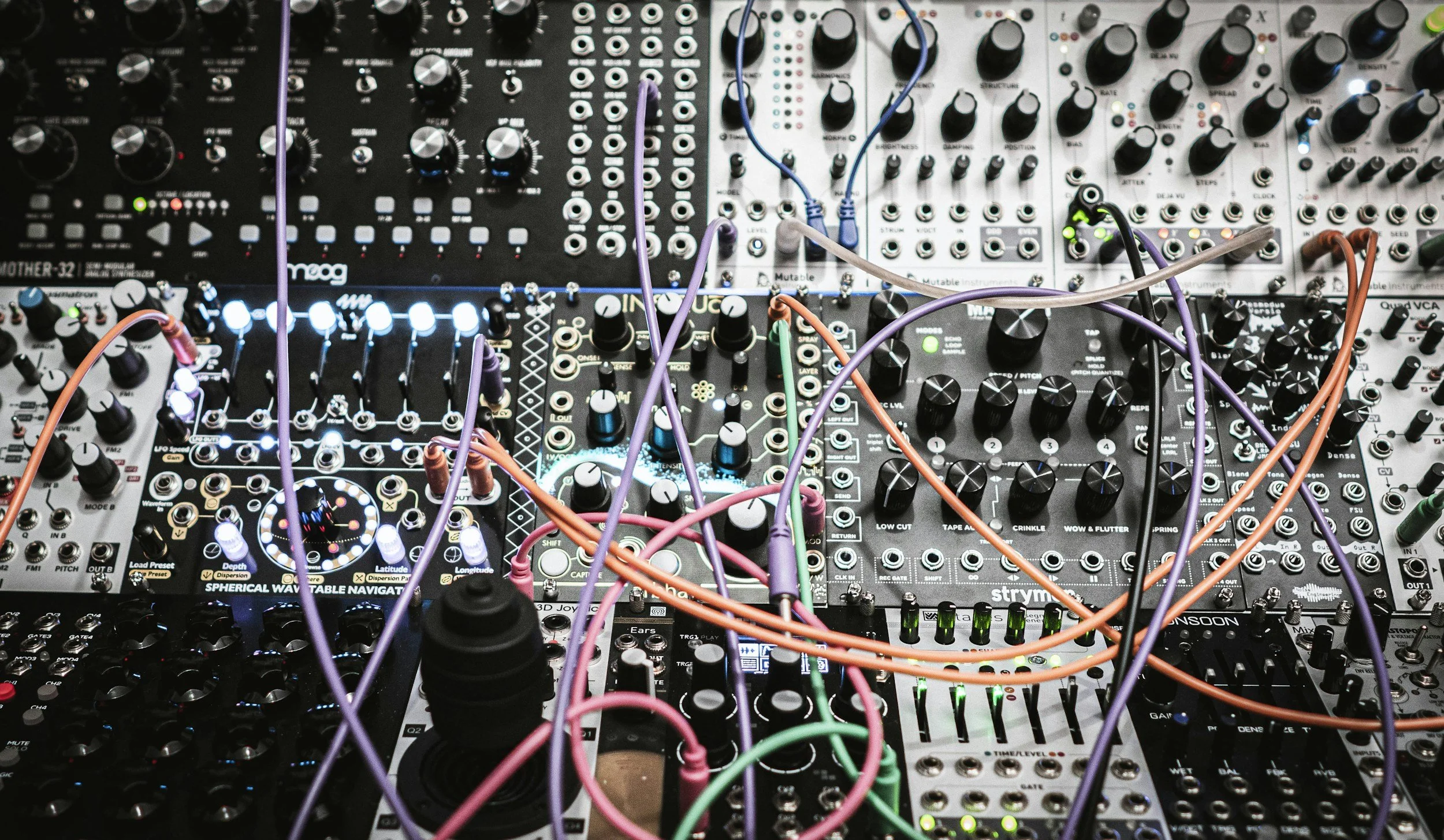
I know it sounds crazy, but when it comes to “icy ambient drones” modular is such a great choice. Not only can you do true “FM” synthesis in a variety of ways, but you can really customize how things are modulating, what’s being modulated and the possibilities are literally endless. Whether you choose VCV Rack (free), Voltage Modular, Softube Modular or even real hardware eurorack, you can’t really go wrong here. The important thing is to keep experimenting with both synthesis type and modulation. You can even run audio signals into modulation sources and so forth for extra frequency goodness! It’s insane and I encourage you to explore and find out for yourself. I have a few VCV Rack tutorials here on Patreon to get you started.
Reverb for Space
With enough reverb, you can pretty much make a drone out of anything, but you can’t just use any reverb, and choosing the right reverb is half the battle. When we think about ambient reverb, our gut instinct is to put both the size and decay to max and let the reverb do the rest of the work. However, there’s more to it than that and it’s important to consider what’s happening when you start introducing this level of reverberation. One technique that I highly suggest you use is to keep the size and decay up, but start your reverb with a relatively low mix ratio, anywhere between 25-50%. By doing this, instead of cranking it all the way up, you’re allowing the natural harmonics of your drone to come through, and allowing the reverb to do the rest of the work where your synthesizer ends. This is the “secret” of reverb that not many people talk about.
Don’t Forget the Bass
Finally, one of the most important “ingredients” when it comes to drones is the bass frequencies and making sure that you build a proper foundation for your drone to live upon. These bass drones don’t have to be overly complex, but they add so much context to your drone and really allow the listener to “feel” the drone internally which in turn, draws them into your world. A long, slow moving bass patch, for example, alongside one of these icy pad drones I spoke of earlier will have a much more dramatic psycho-acoustic effect than the drone on it’s own. Bass with proper movement is essential here and if you can do that, as well as combine all the other techniques I listed above, you’ll be well on your way to creating these icy ambient drones in no time.